

Photovoltaic support design: key and innovation to support green energy
2025-06-14
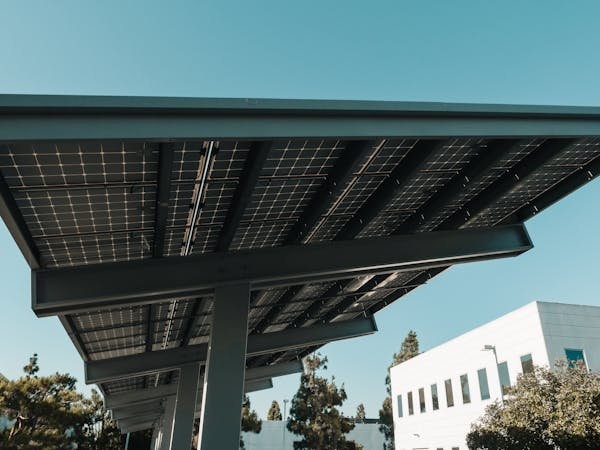
As an indispensable component in the solar photovoltaic power generation system, the design rationality, structural stability and adaptability of the photovoltaic bracket are directly related to the power generation efficiency, safety performance and service life of the photovoltaic power station. This article will deeply explore the core content and importance of this key technology from the aspects of the design principles, technical requirements, market applications and future development trends of the photovoltaic bracket.
Design principles of photovoltaic brackets
The design of photovoltaic brackets should follow the following basic principles:
Structural stability: The structure of the photovoltaic bracket must be stable enough to withstand external loads such as wind and snow loads under various severe climatic conditions to prevent overturning or structural damage. This requires the bracket system to have not only sufficient strength and rigidity, but also good seismic resistance, especially in earthquake zones and typhoon-prone areas.
Convenience of construction: The installation and maintenance of the photovoltaic bracket should be simple and easy, so that construction workers can assemble and disassemble it on the construction site. At the same time, the design of the bracket should also take into account the modularity of the components for easy expansion and maintenance.
Base fixity: The base of the photovoltaic bracket must be firmly fixed to the foundation. Expansion bolts or concrete piles can be used to ensure that the bracket can withstand the effects of forces such as wind and earthquakes.
Photovoltaic module inclination: The design of photovoltaic brackets should take into account the incident angle of sunlight to maximize the absorption of solar energy. According to factors such as the latitude of the area and seasonal changes, determine the appropriate inclination range to ensure that the photovoltaic components can maximize the reception of solar radiation.
Corrosion resistance: The material of the photovoltaic bracket should have good corrosion resistance, be able to resist the erosion of external environments such as solar radiation, wind and sand, rain, etc., and ensure long-term stable operation.
Technical requirements for photovoltaic brackets
According to relevant national standards and industry specifications, the design of photovoltaic brackets should meet the following technical requirements:
Structural design requirements: The main structure of the photovoltaic bracket should be made of suitable materials, such as aluminum alloy, stainless steel and hot-dip galvanized steel, with sufficient rigidity and strength to withstand loads such as wind load and snow load. The connectors of the bracket should have good rigidity and reliability, and be able to withstand long-term use and the influence of the external environment.
Installation design requirements: The installation position of the photovoltaic bracket should be reasonably laid out and calculated to ensure that the spacing between photovoltaic components and the shadow shielding are minimized. The installation of the base should be firm and reliable, and the connection between the base and the bracket should be tight and firm, and able to withstand external forces such as wind and earthquake.
Tilt adjustment requirements: The tilt of the photovoltaic bracket should be adjusted according to the local sunshine conditions and seasonal changes, while ensuring the absorption of maximum light energy, considering the impact of high temperature in summer and low temperature in winter on the components. The tilt adjustment should be simple and easy, and the tilt adjustment should be convenient and accurate by adjusting the height of the base or bracket.
Corrosion protection requirements: The photovoltaic bracket should use materials with good corrosion protection, such as galvanized steel or stainless steel, to resist the erosion of the external environment.
Future development trend
In the future, the design of photovoltaic brackets will pay more attention to innovations in structural optimization, material selection and process improvement to meet the further development needs of photovoltaic power generation technology. On the one hand, technological innovation will continuously promote the improvement of photovoltaic panel efficiency, bracket stability and electrical installation intelligence; on the other hand, the upstream and downstream of the industrial chain will further strengthen cooperation to form a more complete market system and service system. At the same time, the development of mountain flexible photovoltaic technology will also bring new challenges and opportunities to the design of photovoltaic brackets, requiring the bracket design to be more flexible and adaptable to complex terrain and climatic conditions.
Recommended news
Photovoltaic tracking bracket, also known as solar tracking system, is an important technology in the field of solar power generation. By adjusting the illumination angle of photovoltaic equipment in real time, photovoltaic tracking bracket can increase the energy output of photovoltaic modules, thereby significantly improving the power generation efficiency of solar energy systems. This article will introduce the classification, working principle, application advantages and future development trends of photovoltaic tracking brackets in detail.
Photovoltaic bracket: escort for efficient use of solar energy
Recently, the development of the photovoltaic bracket field has once again become the focus of attention in the energy industry, and its important purpose in promoting the efficient use of solar energy and assisting energy transformation has become increasingly prominent.
Photovoltaic support design: key and innovation to support green energy
As an indispensable component in the solar photovoltaic power generation system, the design rationality, structural stability and adaptability of the photovoltaic bracket are directly related to the power generation efficiency, safety performance and service life of the photovoltaic power station. This article will deeply explore the core content and importance of this key technology from the aspects of the design principles, technical requirements, market applications and future development trends of the photovoltaic bracket.
Jiangsu Hongdi New Energy Technology Co., Ltd.
Tel: 13813575552
Email: jshdxn@163.com
Address: No. 55, Hongrun Road, Hongqiao Industrial Park, Taixing City, Jiangsu Province
Website: www.hongdisolar.com

Scan to visit the mobile version
Jiangsu Hongdi New Energy Technology Co., Ltd.